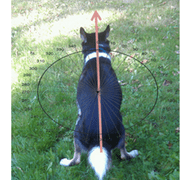
Dogs poop along a north- south axis.
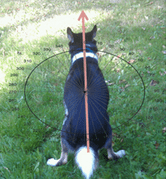
A dog relieving itself using the Earth’s magnetic field.
Dogs like to poop while they are facing north or south.
To come to this conclusion in 2013, scientists from different parts of the world got together and observed 70 dogs (37 breeds) in a free-roaming environment, over two years. In total, 1,893 defecations and 5,582 urinations were recorded.
Dogs can somehow sense the Earth’s magnetic field – which they rely on to relief themselves in such a particular position. The reason for dog’s north-south preference is not clear yet.
Other animals like cow, deer and fox also use the magnetic field for grazing, resting and hunting etc…
When you get lost and have no compass, find squating doggies on their potty break – they will show you a north-south axis at least!
ref. Journal Frontiers in Zoology (2013)
Deadly love dance.
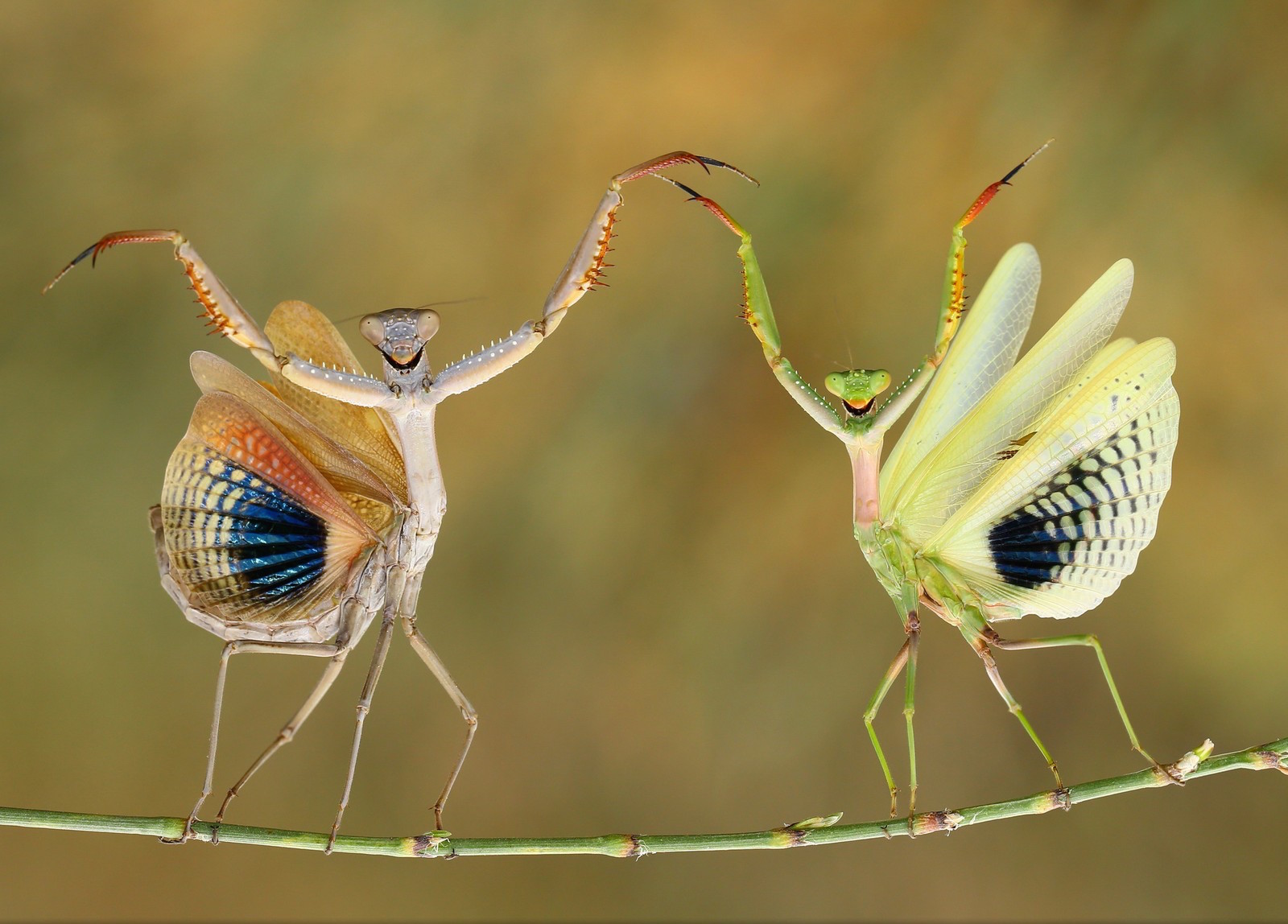
World’s weirdest lovers are probably praying mantises (or some spiders). Love can break your heart, but you’ll be glad you are not a praying mantis.
Male Praying Mantises do their love dance to attract females – and, it will be the first and the last dance for the male mantises.
Because females mantises eat males after, or even during, mating! Like some types of spiders, male praying mantises let females eat them for kids sake!
(photo by Hasan Baglar)
DNA from ancient chewing gums made from birch bark pitch.
The first humans who settled in Scandinavia more than 10,000 years ago left their DNA behind in ancient chewing gums made from birch bark pitch.
The masticates were also used as glue in tool production and other types of technology during the Stone Age.
A group of archaeologists’ unbelievably painstaking process to excavate and preserve such fragile material has shown exciting link between material culture and human genetics.
ref. Communications Biology (Stockholm university; May 2019)
Be nice to everyone in case they remember you.
Even small-brained animals like insects like wasps do have pretty good social memory. They recognise their mates’ faces and remember things they experienced with them etc. Some researches suggest wasps and bees might recognise us, too, after having some sorts of interactions with them for a few days.
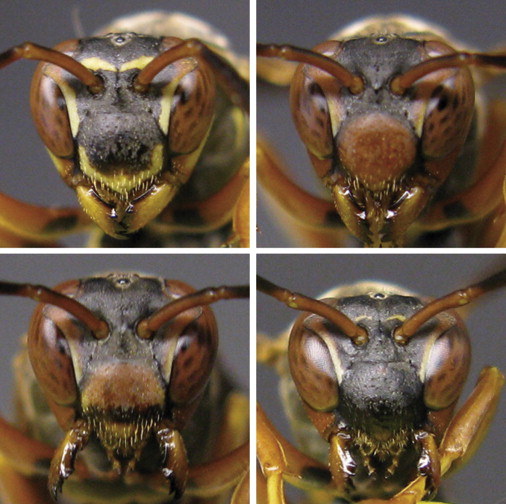
Remembering individual identity is necessary for the complex, individually-differentiated social relationships found in many vertebrates, including humans. Despite the complexity of social insect colonies, individual social insects are generally thought to have simple, undifferentiated relationships.
Polistes fuscatus paper wasps, which individually recognize conspecifics, remember the identity of social partners for at least a week, even if they interact with ten other wasps. Therefore, social interactions among paper wasps are based on robust memories of past interactions with particular individuals rather than simple rules. Considering the small size of wasp brains, these results suggest that at least some aspects of social cognition may not be as cognitively demanding as is generally assumed…
Reference: Robust long-term social memories in a paper wasp (Michael J. Sheehan/Elizabeth A. Tibbetts)
https://www.cell.com/current-biology/issue?pii=S0960-9822(08)X0018-1
Famous dancers in Madagascar becoming critically endangered.
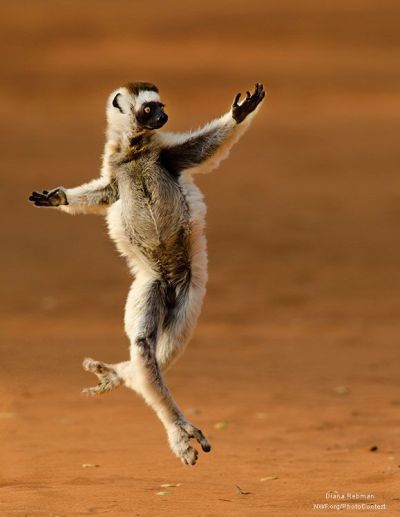
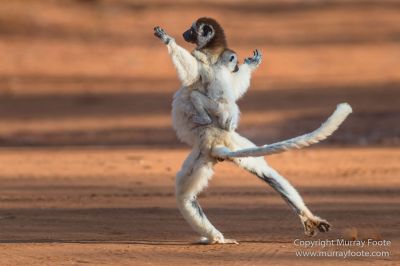

Sifaka lemurs’ famous dance move.
They have a super upright posture and powerful hind legs.
They can move incredibly fast with two-legged sideways hops. Test it yourself.
A sad news is that they are now listed as critically endangered on the Red List. Habitat loss due to deforestation is one of the main reasons.
(Image copyright: Diana Rebman/Murray Foote/Alison Buttigieg)
 DiscoNature